I'm back home but only now have the wherewithal to finish up the rest of my trip sharing. Here is Mark, using the other side of his bandsaw blade that he has sharpened with a grinder, to slice up old bed sheets that he finds at second hand stores. It took him a long time to figure out the best way to do this quickly. Many papermakers would appreciate this kind of repurposing, as cutting up rag is one of the least fun parts of prep when working with fabric.
This is his 20-lb beater, where he has already loaded rag and harakeke. He likes to add some of the latter, always, to strengthen the rag sheets.
He took a break to show me the patch of harakeke down the road, and showed me the baby leaf flanked by the parents, then the grandparents, and so on. Of course you only harvest from the outside leaves, the oldest ones, and he says a prayer before he begins harvesting in the same spirit as the Maori ask permission to harvest.
Here are three old washing tubs repurposed to chunk up his harakeke, that would have already been cooked at this stage.
This is the contraption he made to cut the long leaves into workable lengths.
When I got up my final morning, this is what I saw (well, the morning after that we all had to get up at 3:30am to get ready to head to the airport. I can't believe Jan got an entire breakfast ready, as I told her not to—at least not for me! She said it was okay as long as I had one tiny spoonful of porridge and one frozen blueberry). I was still jet lagged from Melbourne/Tasmania time (not to mention American time) so I had been sleeping late during my stay, but of course Mark was up at 7am because he was excited to get back to papermaking. Can you imagine moving from one house to another, having some random lady come stay with you from Cleveland, and then beating 22 lbs of fiber to pull sheets right away?
Mark likes to harvest his colors from the land. These get ground up into pigment that he uses on his paper in a painterly way.
This is his 2-lb beater, one of his early machines, and it has been chugging along for 20 years or so.
[You can tell I'm still tired because I'm not fixing the order of this to make more sense in sequence.] After the teeth in the washing tubs that he installed chew up the harakeke, it empties into a holding tank to drain, and then into an old washer where he spins the excess water out. Then it goes into the beater.
He was figuring out different ways to make paper for his flower installations, and this is the latest version, pulling 11 at a time, rather than pulling one at a time in old mesh moulds where he needed lots of volunteers to help. These are the medium sized shapes for the flowers, as he layers them all to get dimension and color.
My final night I went through Gin Petty's A Papermaker's Season, which is a book I so covet. Of course I went straight to the milkweed bits. She is AMAZING, something of a national treasure, especially in putting this book together to share her immense knowledge of papermaking from plants. Her handwritten note to Mark was in there, and it was nice to see the connections between these people who live so far away but do similar work.
By lunch, Mark had probably pulled all the sheets he had screens for, which would be 110. In the afternoon, some were already dry.
This is the size of the DHL box that he ships all of his little Critters in, and they fit snugly.
These screens are drying against circus tent poles, from his son, who manages circuses. He had abandoned one after the big earthquake as it was a terrible time for everyone's businesses and lives, so Mark got the poles: lightweight and perfect to prop screens against.
Grateful for all of the time that these artists/builders have given me throughout this long drawn out project! This is definitely the furthest I will have to travel for an interview and I'm glad for the opportunity. Now, time to go over notes and photos and the strategy for interviewing the North American and European folks.
Sunday, July 08, 2018
Monday, June 25, 2018
Kiwi hospitality
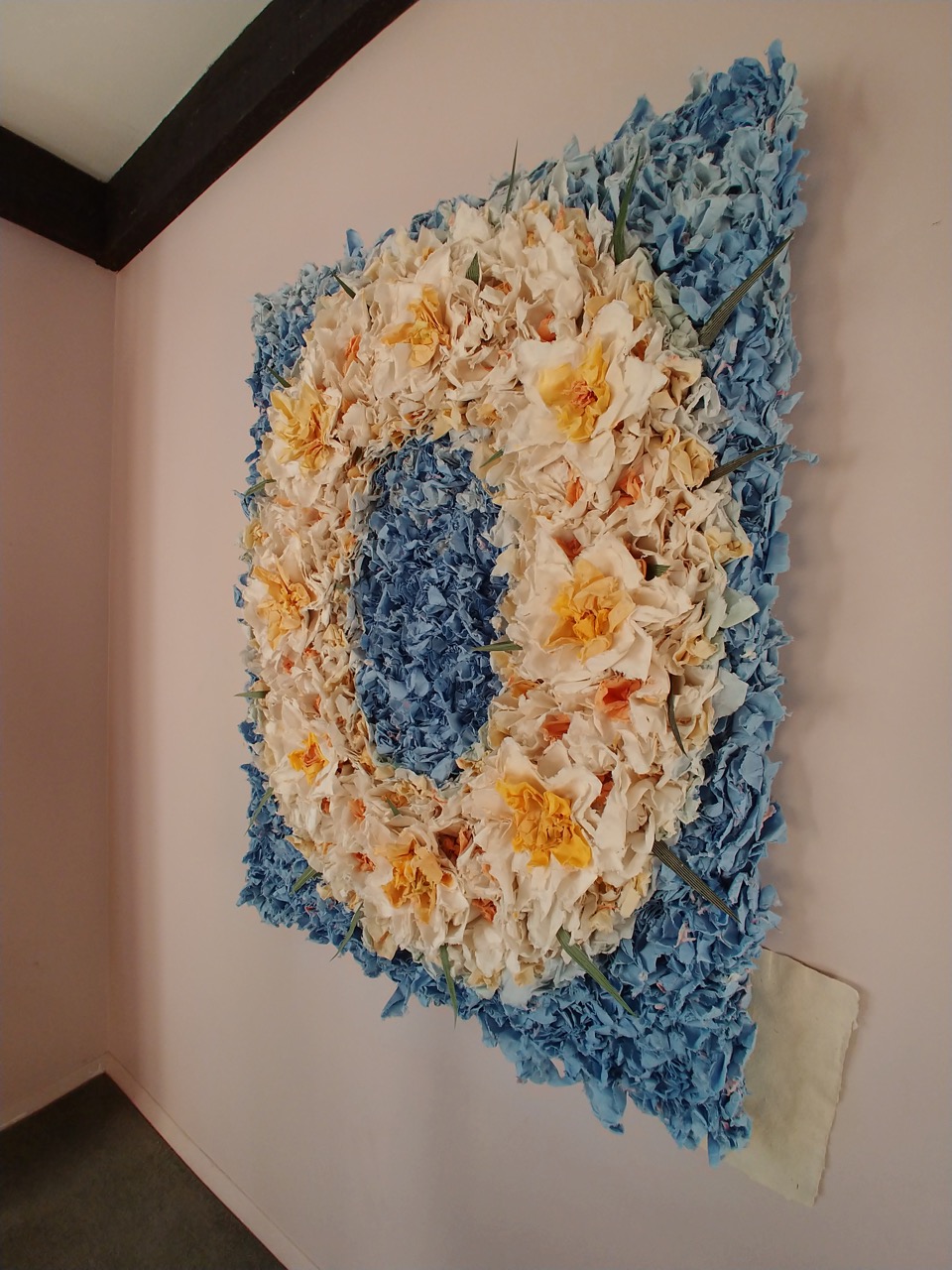
After an unusual night of complete insomnia, I got a ride with Tony to the airport in the dark and wee hours of the morning to fly to New Zealand. The South Island has less than a quarter of the population of the whole country and Christchurch really suffered after its two big earthquakes in 2010 and 2011. But I'm not here for any touristy things, only for research. Here is one of Mark Lander's pieces hanging in his workshop.
Two of his beaters that work outside. Both are full right now, one with rag and one with rag + New Zealand flax—known as harakeke by the Maori. It's not related at all to the flax that is in the Northern Hemisphere. Misnomers run rampant and it would be nice to restore the names given by the original keepers of the land. Anyhow, this is Mark's main material and he makes beautiful paper with it.
Here are two of his floral wreaths made of paper, and you can see the harakeke big sheets hanging like gauze. He originated lots of methods of making huge paper, with his biggest sheets measuring 10 meters square (almost 33 square feet).
He creates pigments that he paints with from the earth, getting a wide range of colors, all from the area. Using local materials is important to him, and he also always asks for a blessing before harvesting his plants.
He taught himself piano and has this gorgeous grand in the workshop. Janet, his wife, is behind—can you believe they allowed me to come and stay right as they finished up moving?! After having moved to a new house only months ago, I have a hard time believing I could have hosted a stranger from another country right in the throes of it. They are so kind and generous, and Jan has been cooking up wonderful meals for us throughout.
The day after I arrived, they were kind enough to drive me around Christchurch to see bits of the city, including the earthquake ruins. This church has shipping containers stacked up on the other side just to keep the whole thing from falling down.
This is the famous cardboard church made to temporarily replace another that was damaged, though it is now permanent—also created by a Japanese architect who had done similar structures in Japan after natural disasters.
Part of Mark's hospitality is that he sews up these wolf onesies, complete with hoods and tails, so that guests can climb into them and stay warm. He's been sewing since he was a kid. Amazing!
Jan is down there amidst the tussocks (after we came back down, on the way home she rooted around on the ground behind her old garden to find the last of the feijoas so that I could have a taste. A gorgeous green fruit). What a beautiful drive, which they would do on bike and foot. The weather has been stunning for my entire visit down under. Only tomorrow will be cloudy and potentially rainy, but I'm grateful for all the sun throughout their winter solstice and beyond.
Two of his beaters that work outside. Both are full right now, one with rag and one with rag + New Zealand flax—known as harakeke by the Maori. It's not related at all to the flax that is in the Northern Hemisphere. Misnomers run rampant and it would be nice to restore the names given by the original keepers of the land. Anyhow, this is Mark's main material and he makes beautiful paper with it.
Here are two of his floral wreaths made of paper, and you can see the harakeke big sheets hanging like gauze. He originated lots of methods of making huge paper, with his biggest sheets measuring 10 meters square (almost 33 square feet).
He creates pigments that he paints with from the earth, getting a wide range of colors, all from the area. Using local materials is important to him, and he also always asks for a blessing before harvesting his plants.
He taught himself piano and has this gorgeous grand in the workshop. Janet, his wife, is behind—can you believe they allowed me to come and stay right as they finished up moving?! After having moved to a new house only months ago, I have a hard time believing I could have hosted a stranger from another country right in the throes of it. They are so kind and generous, and Jan has been cooking up wonderful meals for us throughout.
The day after I arrived, they were kind enough to drive me around Christchurch to see bits of the city, including the earthquake ruins. This church has shipping containers stacked up on the other side just to keep the whole thing from falling down.
This is the famous cardboard church made to temporarily replace another that was damaged, though it is now permanent—also created by a Japanese architect who had done similar structures in Japan after natural disasters.
Part of Mark's hospitality is that he sews up these wolf onesies, complete with hoods and tails, so that guests can climb into them and stay warm. He's been sewing since he was a kid. Amazing!
After seeing buildings, we drove through Sumner, a lovely seaside town, and up an old volcano rim to see stunning views. I was so busy gawking that I didn't take pictures of the eastern shoreline but we did jump out of the car to look at the harbor.
Sunday, June 24, 2018
Melbourne in a jiffy
Melbourne was my "time off" when I scheduled zero teaching, no work, and only time and space to explore and relax. Here is the tapestry workshop.
There wasn't a ton of Korean art in the NGV but this hanbok was more interesting than it looks in this not very good photograph (I think for sure I need a new camera, but I don't want to carry a real camera around).
Women were rowing on the Yarra River as I crossed Princes Bridge. I walked a bunch that day but was not particularly productive. I did find a Korean place for good soup, though, so that's not nothing.
Barb was incredible! She picked me up, set up papermaking from plants that grow in the area, had Gail come over to join us for show and tell + papermaking + a delicious lunch (more soup! I love soup and winter is the best time for it), took me to a shop for local artists, showed me her brilliant garden, cooked me dinner, and drove me home.
It was chilly so they filled the vats with nice hot water. It was almost like spa papermaking. Barb has a perfect home setup with foolproof couching stations, tons of moulds, a lovely screw press, and the perfect floors and light. What an inspiration (the second wood floor paper studio I've worked in. I want one very badly).
THEN, she hand delivered the dry paper to me the next day when I was out. Amazing! I was really touched by how generous and warm hearted she is.
I had kumquats from her garden, delicious, and admired her chair along with so many special touches. Lots of ideas for home, though of course their climate is different from mine.
The last day was a visit to Colleen and Brian. See a theme? I love this and wish I could do the same to my utility sink in the basement, but that's really not a wise use of my time.
Ilka pointed out the eyelashes on the other alpaca (you can't see her head). They're both pregnant.
Anne, Colleen, Ilka, and Brian around the special onions that grow up and then fall down, only to root themselves from the head that becomes the root, and grows again. What a smart plant!
This is how textile folks travel: Ilka's spinning wheel, gifts that Brian dug up (New Zealand flax, those onions, and woad that grows like a weed), and so much more. We had hot chocolate at the theatre in Castlemaine before scattering again. The entire time, Anne cooked the most delicious meals. Tony was kind enough to wake up earlier than he had to so we could share a cab to the airport: he to Tasmania, and me to New Zealand.
There wasn't a ton of Korean art in the NGV but this hanbok was more interesting than it looks in this not very good photograph (I think for sure I need a new camera, but I don't want to carry a real camera around).
Women were rowing on the Yarra River as I crossed Princes Bridge. I walked a bunch that day but was not particularly productive. I did find a Korean place for good soup, though, so that's not nothing.
Barb was incredible! She picked me up, set up papermaking from plants that grow in the area, had Gail come over to join us for show and tell + papermaking + a delicious lunch (more soup! I love soup and winter is the best time for it), took me to a shop for local artists, showed me her brilliant garden, cooked me dinner, and drove me home.
It was chilly so they filled the vats with nice hot water. It was almost like spa papermaking. Barb has a perfect home setup with foolproof couching stations, tons of moulds, a lovely screw press, and the perfect floors and light. What an inspiration (the second wood floor paper studio I've worked in. I want one very badly).
THEN, she hand delivered the dry paper to me the next day when I was out. Amazing! I was really touched by how generous and warm hearted she is.
I had kumquats from her garden, delicious, and admired her chair along with so many special touches. Lots of ideas for home, though of course their climate is different from mine.
The last day was a visit to Colleen and Brian. See a theme? I love this and wish I could do the same to my utility sink in the basement, but that's really not a wise use of my time.
Ilka pointed out the eyelashes on the other alpaca (you can't see her head). They're both pregnant.
Anne, Colleen, Ilka, and Brian around the special onions that grow up and then fall down, only to root themselves from the head that becomes the root, and grows again. What a smart plant!
This is how textile folks travel: Ilka's spinning wheel, gifts that Brian dug up (New Zealand flax, those onions, and woad that grows like a weed), and so much more. We had hot chocolate at the theatre in Castlemaine before scattering again. The entire time, Anne cooked the most delicious meals. Tony was kind enough to wake up earlier than he had to so we could share a cab to the airport: he to Tasmania, and me to New Zealand.
Wednesday, June 20, 2018
The last bit of Tasmania
This is a paper sculpture by Ruth Rees and Pam Thorne from 2006 called "A Man & His Dog" that is at the whisky distillery in Burnie where I had lunch overlooking amazing landscapes that included seeing snow in the distance and a pair of eagles flying overhead.
This is obviously a terrible shot because the sun is RIGHT THERE but in the distance you can see Table Cape. This was during Lynne's grand tour that she gave me of the area that is all so beautiful. I was learning about house prices and property tax rates! If there was reliable work, it seems like a nice place to live.
Penguin is ALSO a place that seems like a wonderful place to live, right on the water with a very cute downtown.
Pam is admiring a project in progress that we walked by on the beach. Lyndal insisted that we come down to shore before getting me to the airport. It's so nice here the way domestic flights work out of the tiny airport: you just have to arrive about half an hour, maybe even less, and there's ZERO security. I was shocked.
More water and sky and sun.
When we got back from the beach, we of course had to go see the penguin! Two seagulls were perched on top.
Somehow we had time to stop at Pam's and Neil's house on the way to the airport, where she showed me this beautiful tapa from Papua New Guinea, in exquisite shape, and explained how the pattern was made in one section, then folded over, and then approximated from that point, and so on.
Before loading back into the car, Pam showed us the remnants of her tests of native Tasmanian plants for papermaking, which included a native help that stripped beautifully (the woody core in her hand). The leaves to the side she said were split in half to scrape by the indigenous people and that makes SO much sense when I think of how hard it is to scrape things like yucca leaves from the outside. Donna had also mentioned Maori traditions of scraping similar plants with mussel shells.
Pam is a remarkable sculptor, and these are small paper figures. Apparently, her large figures that she made with Ruth are all over town in various places that I didn't have time to visit.
Pam also made all of this string by hand with dress pattern paper. She then makes beautiful pieces from that, including the costume and hat that Lyndal wore on the Friday night event, and her own beautiful collar that night.
To cap it all off, I raced down to Neil's shop. I didn't know until I got to town that Neil also makes paper moulds!
I was being called off to get in the car so as not to miss my flight so I wasn't able to shoot the very first mould he made but it was using what looked like plastic crating as a support. I love that these toolmakers keep their early efforts.
He showed me their little critter by Mark Lander. In several days, I'll be in New Zealand to finally meet the maker himself.
This is obviously a terrible shot because the sun is RIGHT THERE but in the distance you can see Table Cape. This was during Lynne's grand tour that she gave me of the area that is all so beautiful. I was learning about house prices and property tax rates! If there was reliable work, it seems like a nice place to live.
Penguin is ALSO a place that seems like a wonderful place to live, right on the water with a very cute downtown.
Pam is admiring a project in progress that we walked by on the beach. Lyndal insisted that we come down to shore before getting me to the airport. It's so nice here the way domestic flights work out of the tiny airport: you just have to arrive about half an hour, maybe even less, and there's ZERO security. I was shocked.
More water and sky and sun.
When we got back from the beach, we of course had to go see the penguin! Two seagulls were perched on top.
Somehow we had time to stop at Pam's and Neil's house on the way to the airport, where she showed me this beautiful tapa from Papua New Guinea, in exquisite shape, and explained how the pattern was made in one section, then folded over, and then approximated from that point, and so on.
Before loading back into the car, Pam showed us the remnants of her tests of native Tasmanian plants for papermaking, which included a native help that stripped beautifully (the woody core in her hand). The leaves to the side she said were split in half to scrape by the indigenous people and that makes SO much sense when I think of how hard it is to scrape things like yucca leaves from the outside. Donna had also mentioned Maori traditions of scraping similar plants with mussel shells.
Pam is a remarkable sculptor, and these are small paper figures. Apparently, her large figures that she made with Ruth are all over town in various places that I didn't have time to visit.
Pam also made all of this string by hand with dress pattern paper. She then makes beautiful pieces from that, including the costume and hat that Lyndal wore on the Friday night event, and her own beautiful collar that night.
To cap it all off, I raced down to Neil's shop. I didn't know until I got to town that Neil also makes paper moulds!
I was being called off to get in the car so as not to miss my flight so I wasn't able to shoot the very first mould he made but it was using what looked like plastic crating as a support. I love that these toolmakers keep their early efforts.
He showed me their little critter by Mark Lander. In several days, I'll be in New Zealand to finally meet the maker himself.
Monday, June 18, 2018
Post-workshop, still sunny in Burnie
Burnie has a long paper history, and you can see the image up top of those huge paper rolls that still remain in this town.
This was my first group of intrepid beaters. Not sure you can see, but it was COLD and WINDY throughout. They were real troopers!
This was the papermaking area and we had six vats going in these built-in sinks. So much stainless, so fancy!
Boarding was on these lovely glass walls that encase more walls inside for their regular production drying.
Here are Jan Marinos and Pam Thorne, talking about their experiments with native Tasmanian fibers to see if any could substitute paper mulberry in our process. No luck, but LOTS of learning.
I was really impressed by all of their attempts and how hard they worked to see what was possible. They learned a lot about one particular native hemp that looks promising in other ways.
Darren ran the press for us and did so much other work that made our lives much easier. Very luxurious options for a paper studio!
This was day 2, with almost all of the sheets made on student sugetas that Neil Thorne had made—and then gave away at the end of class! The generosity of the hosts here has been incredible.
Of course, also lots and lots of dry work with hanji manipulation that everyone got into.
Stephanie was so focused throughout and later I found out that she had done an internship years ago at Dieu Donné! And her parents are from Ohio, though she grew up in Australia. It was fabulous to have such a big range of students and experience, with those who had made paper before to those who hadn't. Donna came all the way from New Zealand and shared beautiful Maori knowledge with me, including how they spin their native fibers to make 2-ply string, on their thighs. I even got to the studio yesterday to collect dry paper and find students telling me I was on the front page of the local paper. Yesterday was my free day and Lynne, president of Burnie Arts Council, took me on a magnificent tour of the coast, all the way to visit Jan in her home studio. I could do this forever. Alas, my flight leaves today for Melbourne! It has been a nearly perfect visit, and I hope the good juju will continue throughout.
This was my first group of intrepid beaters. Not sure you can see, but it was COLD and WINDY throughout. They were real troopers!
This was the papermaking area and we had six vats going in these built-in sinks. So much stainless, so fancy!
Boarding was on these lovely glass walls that encase more walls inside for their regular production drying.
Here are Jan Marinos and Pam Thorne, talking about their experiments with native Tasmanian fibers to see if any could substitute paper mulberry in our process. No luck, but LOTS of learning.
I was really impressed by all of their attempts and how hard they worked to see what was possible. They learned a lot about one particular native hemp that looks promising in other ways.
Darren ran the press for us and did so much other work that made our lives much easier. Very luxurious options for a paper studio!
This was day 2, with almost all of the sheets made on student sugetas that Neil Thorne had made—and then gave away at the end of class! The generosity of the hosts here has been incredible.
Of course, also lots and lots of dry work with hanji manipulation that everyone got into.
Stephanie was so focused throughout and later I found out that she had done an internship years ago at Dieu Donné! And her parents are from Ohio, though she grew up in Australia. It was fabulous to have such a big range of students and experience, with those who had made paper before to those who hadn't. Donna came all the way from New Zealand and shared beautiful Maori knowledge with me, including how they spin their native fibers to make 2-ply string, on their thighs. I even got to the studio yesterday to collect dry paper and find students telling me I was on the front page of the local paper. Yesterday was my free day and Lynne, president of Burnie Arts Council, took me on a magnificent tour of the coast, all the way to visit Jan in her home studio. I could do this forever. Alas, my flight leaves today for Melbourne! It has been a nearly perfect visit, and I hope the good juju will continue throughout.
Subscribe to:
Posts (Atom)